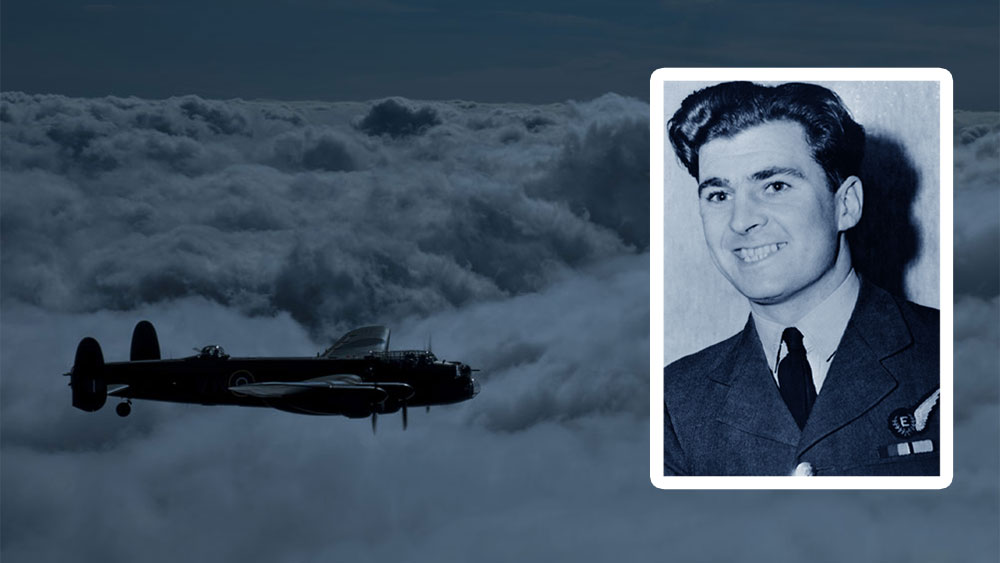
On the night of 26/27 April 1944, a Lancaster of No. 106 Squadron RAF flew home from a raid on Schweinfurt, Germany. In the cramped engineer’s seat sat Sergeant Norman Cyril Jackson. He was a 25-year-old Londoner who shouldn’t really have been there. He’d already completed 30 operations with Bomber Command but volunteered for one last trip so his regular crew could finish their tour together.
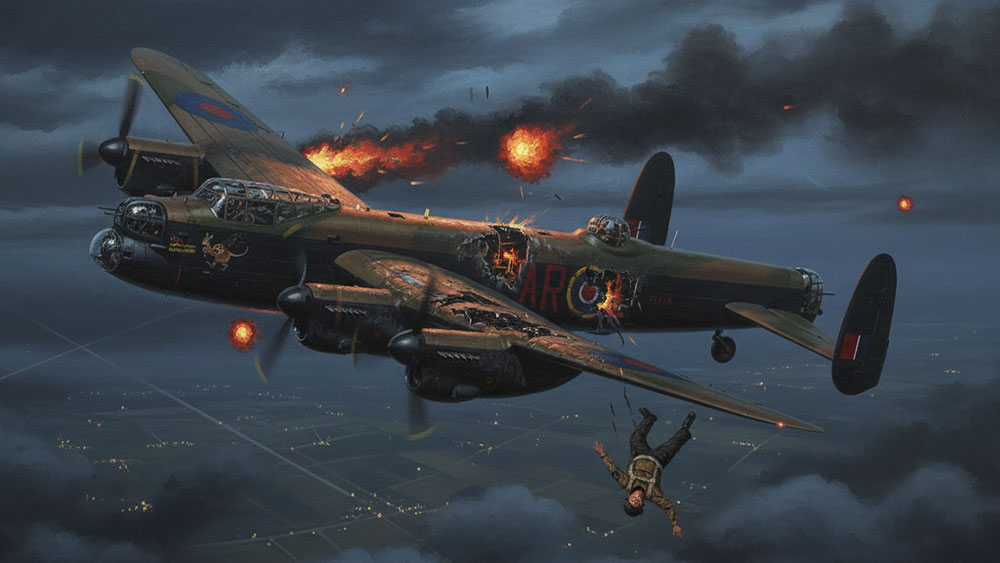
Over Germany that night, a German night fighter tore into their Lancaster, setting a fuel tank on the starboard wing ablaze. At 20,000 feet, and roughly 200 mph, Norman Jackson clipped on his parachute, grabbed a fire extinguisher… and climbed out onto the top of the bomber to fight the fire by hand.
Blown off the wing, shot and burned, he fell through the night with a damaged parachute but incredibly survived. He spent months in German hospitals and POW camps, and only after the war learned that his crew had told the full story. In 1945 he received the Victoria Cross.
This is the story of the Normal Cyril Jackson VC who literally went out on the wing and how his incredible feat sits alongside an earlier, equally mad wing-crawl by James Ward VC.
One last mission: Norman Jackson and 106 Squadron
Norman Cyril Jackson was born in Ealing in 1919, adopted as a baby by the Gunter family. He trained as a fitter and volunteered for the RAF at the outbreak of war, originally serving as ground crew and engine fitter. In 1941 he was posted to 95 Squadron, working on Sunderland flying boats in Freetown, Sierra Leone. There he applied to retrain as a flight engineer – the specialist responsible for monitoring engines, fuel, and systems on multi-engined bombers. He returned to Britain, completed his training, and in July 1943 joined No. 106 Squadron, then operating Avro Lancasters from RAF Syerston and later RAF Metheringham.
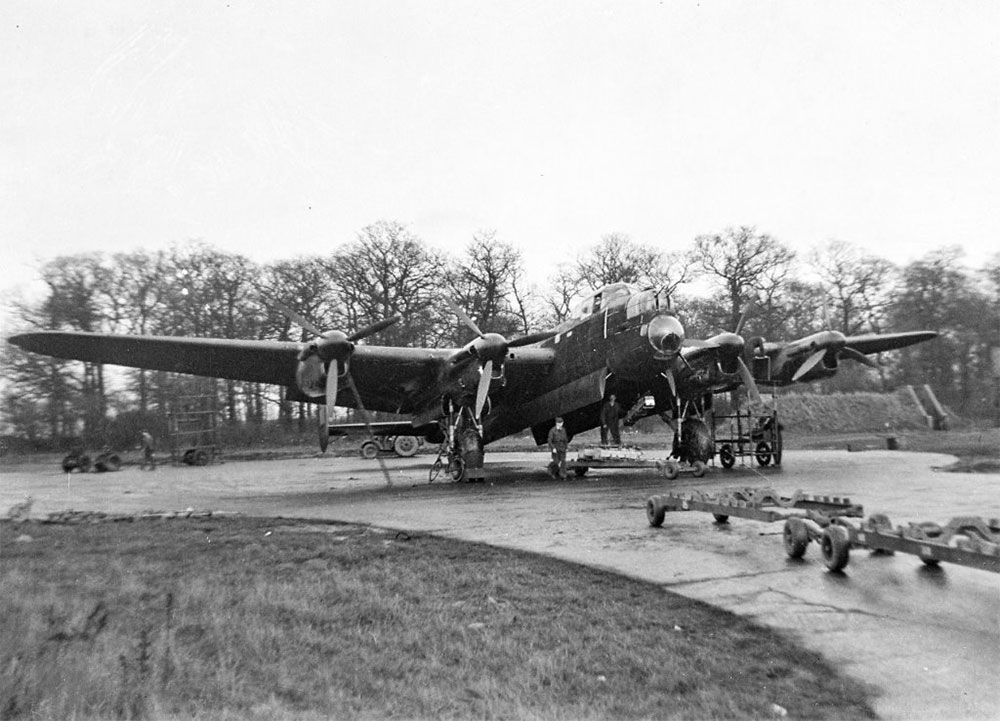
By April 1944, Jackson had flown 30 operations, typically meaning he could stand down, and was officially due to be sent off operations. But there was a catch: one of those sorties had been with a different crew. His own regular crew, captained by Flying Officer Frederick Mifflin, were one mission behind.
Jackson chose to stay on and fly one more raid so the crew could finish their tour together. The target for that 31st sortie: the ball-bearing factories of Schweinfurt in Germany.
Schweinfurt, April 1944: into the flak box
Schweinfurt was a familiar name to aircrew, but unfortunately not in a good way. The city’s ball-bearing plants had already been the focus of costly USAAF attacks. Now Bomber Command’s No. 5 Group, including 106 Squadron, was ordered to hit the target by night. On 26 April 1944, over 200 Lancasters and a small force of Mosquitoes took off for what was expected to be a heavily defended raid.
Lancaster ME669, coded ZN-O, carried Jackson’s crew:
- Pilot: F/O Frederick Manuel Mifflin
- Navigator: F/Sgt Frank Lewis Higgins
- Bomb aimer: F/Sgt Maurice Harry Toft
- Wireless operator: F/Sgt Ernest “Sandy” Sandelands
- Gunners: F/Sgt Walter “Smudger” Smith and F/Sgt Norman Hugh Johnson
- Flight engineer: Sgt Norman Jackson
The outbound trip and bombing run were, by the standards of Bomber Command, routine. ME669 reached Schweinfurt, released its bombs, and began climbing away from the target area. Then, somewhere over Germany in the small hours, a night fighter pounced.
Night fighter attack: fire on the wing
At around 20,000 feet the Lancaster was suddenly raked by cannon fire from a German night fighter. The pilot hauled the bomber into evasive action, but the enemy’s first burst had done its work. Shells smashed into the airframe and a fuel tank on the upper surface of the starboard wing, between fuselage and inner engine, burst into flames.
Normal Cyril Jackson was thrown to the floor by the impact. Shell splinters tore into his right leg and shoulder. When he struggled back to his feet, he could see fire boiling along the wing, perilously close to the main fuel tanks. Every Bomber Command veteran knew what that meant: if the fire reached the tanks, ME669 would almost certainly explode.
As flight engineer – and the most technically experienced man on board – Jackson felt the problem was his to solve. He told Mifflin he believed he could get out onto the wing and try to fight the fire. Incredibly, the captain agreed.
What followed is laid out, in typically understated language, in his VC citation.
The VC who literally went out on the wing
Jackson clipped on his parachute pack, shoved a hand fire extinguisher into the front of his life jacket, and jettisoned the small escape hatch above the pilot’s head. With the bomber still thundering along at roughly 200 mph in the thin, freezing air around 20,000 feet, he began to climb out of the cockpit and onto the top of the fuselage.
Then things went wrong.
As he squeezed through the hatch, his parachute pack snagged and burst open. The canopy and rigging lines spilled into the cockpit like a live thing, filling the space with flapping silk. Lesser men might have taken that as a sign to stop. Jackson kept going.
Inside, Mifflin, Higgins and Toft grabbed the mass of parachute fabric and lines, gathered it together and held on, paying it out like a rope as Jackson crawled aft along the top of the fuselage.
Out in the slipstream, blasted by freezing air and flying sparks from the burning wing, Jackson edged back until he could lower himself onto the starboard wing. At some point he slipped from the fuselage and fell onto the wing surface, managing to grab an air intake on the leading edge and cling on. In the chaos he lost the fire extinguisher; it was whipped away into the dark night.
The fire was now racing along the wing, and Jackson himself was being burned on his face, hands, clothing. Still, he tried to smother the flames and beat them back with his body.
He couldn’t hold on. Swept by slipstream and flame, he was dragged through the fire and off the trailing edge of the wing, dragged behind the bomber by his parachute’s rigging lines. Inside, the crew saw him vanish. The last glimpse they had was of his parachute canopy, only partly inflated and already burning in several places.
Realising the fire was beyond saving, Mifflin finally ordered the crew to abandon aircraft. Four of airmen – Higgins, Toft, Sandelands and Smith – got out and survived as prisoners of war. Mifflin and rear gunner Norman Johnson were never found.
As for the man on the wing, he was now falling alone through the dark.
Fall, capture and ten months in hospital
Jackson had little control over his descent. His parachute, torn and burned, did at least slow him enough that he survived impact with the ground, but the landing was brutal. He hit heavily, breaking an ankle. His right eye was swollen closed from burns, and his hands were “useless” – skin charred away, fingers badly damaged. He was also bleeding from the leg and shoulder wounds he had suffered in the original attack.
At dawn he began to crawl, using his knees and elbows because his hands would not work, towards the nearest village. He eventually reached a cottage and knocked. A young woman from the household bathed his wounds. German authorities soon arrived and took him prisoner.
Jackson spent around ten months in German hospitals, undergoing treatment for his burns, injured eye, broken ankle and earlier shrapnel wounds. Even after extensive care, his hands never fully recovered; they remained scarred and only partly functional for the rest of his life.
Eventually he was sent to a prisoner-of-war camp. He made two escape attempts; on the second he managed to get clear and linked up with advancing American forces near Munich in 1945.
Back in Britain, his crew’s story finally reached the authorities.
“An almost incredible feat”: the Victoria Cross
Jackson’s heroism was not known to the RAF in detail until after the war, when the surviving members of his crew were repatriated from German camps and gave full accounts of what had happened that night. Jackson himself had said very little.
On 26 October 1945, the award of the Victoria Cross to Sergeant (later Warrant Officer) Norman Cyril Jackson was announced in the London Gazette. The citation described in precise, almost clinical detail how he climbed out through the escape hatch, how his parachute spilled into the cockpit, how the crew held the rigging lines as he crawled back, how he slipped to the wing and then fell through the flames. It concluded:
“to venture outside, when travelling at 200 miles an hour, at a great height and in intense cold, was an almost incredible feat.”
When Jackson went to Buckingham Palace to receive his VC from King George VI, he did so on the same day as Group Captain Leonard Cheshire. Cheshire, already a legend in Bomber Command, insisted they should approach the King together despite the difference in rank. He reportedly told the King, “This chap stuck his neck out more than I did – he should get his VC first!” Protocol meant the King could not oblige, but Jackson never forgot the remark.
After the war, Jackson took a job as a travelling salesman for a whisky company. He and his wife Alma raised six children. Because he had been adopted himself, he was, by all accounts, fiercely devoted to his family. Despite nightmares and bouts of melancholy, he led a quiet life, rarely talking about the VC.
He died in 1994 and is buried in Twickenham Cemetery; his gravestone simply records his name, dates and the letters “VC”, alongside Alma’s, in a neat suburban row.
Not the first: James Ward VC and the Wellington wing crawl
Norman Jackson’s exploit is astonishing enough that it sounds unique. In fact, there was an earlier, eerily similar case – and Jackson himself later acknowledged it.
In July 1941, New Zealander Sergeant James Allen Ward of No. 75 Squadron RAF was co-pilot of a Vickers Wellington returning from a raid on Münster when a German night fighter set the starboard engine and wing alight over the Zuiderzee. After fire extinguishers and even coffee poured through a hole in the fuselage failed to put out the flames, Ward volunteered to try something desperate.
He climbed out through the astrodome on top of the fuselage, secured by a rope from the dinghy line, and began working his way along the side of the Wellington. To move, he kicked and tore holes in the fabric skin of the aircraft, creating hand and footholds. In the slipstream, “like being in a terrific gale only worse than any gale I’ve ever known,” as he later put it, he edged onto the wing and managed to smother the fire with a canvas engine cover.
Ward made it back into the aircraft with help from his navigator, and the crew brought the damaged Wellington home for a crash-landing. For this, he became the first New Zealand airman of the war to receive the Victoria Cross. Two months later, flying as captain of another Wellington, he was killed over Germany.