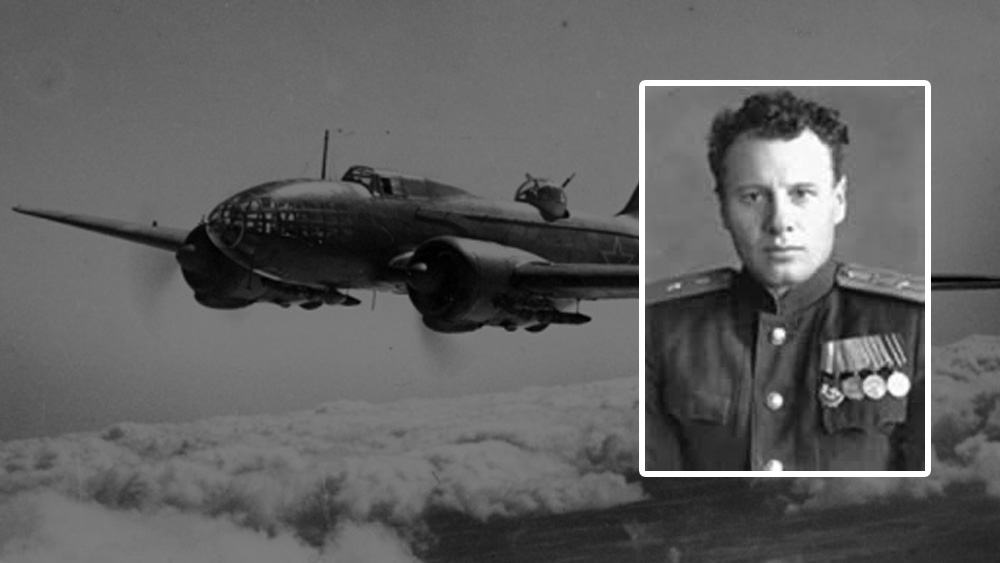
Ivan Mikhailovich Chisov was a Soviet Air Force lieutenant who survived a fall of approximately 7,000 meters (23,000 feet). It’s an incredible story, here’s what happened…
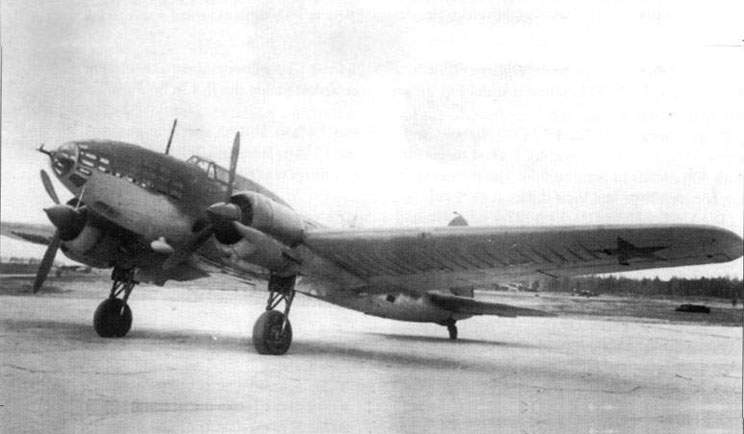
On 21 January 1942, a Soviet Il-4 (also known earlier as the DB-3F) was returning from a bombing sortie when it was caught by German fighters. Somewhere over the snowy front line, the crew were forced into the one decision aircrew never wanted: get out or go down with the aircraft. Navigator Ivan Mikhailovich Chisov did get out. What happened next was incredible.
The core, repeatable facts are these: Ivan Chisov left the bomber at high altitude, fell a long way without a functioning descent under his parachute canopy, and survived because the impact of his fall was broken and softened by terrain and deep snow in a ravine. He did not walk away. He lived, but badly hurt, and he never returned to frontline flying.
The aircraft and the moment of Ivan Chisov’s fall
Ivan Chisov was a navigator in a long-range bomber regiment, flying in the crew of pilot Nikolai Zhugan. After the the event of Ivan Chisov’s fall, Zhugan described being intercepted after the bomb run: the Il-4 was damaged, both gunners were killed, and the aircraft became difficult or impossible to control. Zhugan ordered the crew to bail out. Chisov answered and left via the lower hatch.
A recurring detail in Soviet accounts is the altitude: around 7,000 metres (roughly 23,000 feet). Zhugan is quoted as noticing the height at the moment Chisov departed, and then leaving the aircraft himself later, at a lower altitude.
This matters because it sets up the next piece: what Chisov intended to do with his parachute.
Why Ivan Chisov’s parachute did not save him
Most retellings agree on the basic idea that Ivan Chisov did not want to open his parachute immediately while enemy fighters were still close. The logic is grim but simple: a parachute turns a man into a slow, obvious target. In Zhugan’s telling, Chisov likely chose a delayed opening and then lost consciousness in the thin air, without oxygen, and never pulled in time.
There is also a more detailed first-person narrative attributed to Chisov himself, in which he says he tried to deploy late, only to find the parachute failed because the ripcord system had been damaged (the cable or link severed). That version ends with him realising, very clearly, that the ground was arriving and the parachute was not.
Those two accounts are not mutually exclusive. They do, however, leave a gap that is hard to close from open sources: whether the key problem was unconsciousness, damage to the parachute, or both. What is solid is that he hit the ground without a normal canopy descent.
How did Ivan Chisov survive falling 23,000 feet?
Ivan Chisov’s survival is often described as luck, but the mechanism is more specific than that. Observers on the ground saw him falling without a canopy and ran to the impact area. He had dropped into a deep, snow-filled ravine. Snow absorbed some of the initial shock, and the slope of the ravine allowed him to slide, bleeding off speed rather than stopping dead in one instant.
That is the physical heart of the story: not “soft snow” as a cushion, but snow plus a shaped slope acting as a crude brake.
Even so, the injuries were serious. Accounts describing the incident talk about heavy damage to the pelvis and related trauma, multiple operations, and a long recovery.
Did You Know: An American ball turret gunner named Alan Magee fell from a similar distance in WW2, and also survived. A RAF gunner named Nicholas Alkemade also fell without a parachute, and lived to tell the tale.
Aftermath: survival, fame, and being pulled off flying
Chisov was recovered by Soviet troops and taken through frontline medical care to hospital treatment. Some accounts name the medics involved and describe a drawn-out fight to keep him alive, followed by evacuation to a rear hospital.
Within weeks, the story reached the press. Soviet retellings note that a wartime military correspondent wrote about the fall during 1942, and later accounts often point to that coverage as the moment the incident became widely known.
Chisov asked to return to operations. He was refused, and instead moved into an instructional role, teaching navigation and passing on experience from the bomber war rather than taking part in it.
What to take away (without turning it into myth)
Ivan Chisov’s fall sits in that uneasy category of wartime stories that are real, well-attested in broad outline, and still oddly fragile when you push for clean technical certainty. Altitude figures vary slightly across sources, and the exact sequence around oxygen loss and parachute failure is reported more than one way.
But the essentials are not in doubt: a Soviet navigator left a crippled Il-4 at extreme altitude, did not descend under a working parachute, and survived because he landed into a snow-choked ravine and slid. He lived, he paid for it in injuries, and the Soviet Air Force kept him, sensibly, away from combat thereafter.